

 See My Latest Article on HelloNation
What Makes an Outdoor Space Truly Pet-Friendly?
A pet-friendly outdoor space is one where pets are safe, comfortable, and stimulated, while minimizing risks common to yards in Lansing, MI. Local residents often ask how to balance a beautiful landscape with the needs of their dogs or cats. Meeting both goals is possible through smart plant choices, secure fencing, and hazard prevention that accounts for the area’s climate and seasons.
Practical pet-friendly design isn’t just about avoiding toxic plants or sturdy fencing—it’s about anticipating how pets interact with outdoor environments, from digging to lounging in the shade. Lansing households can adapt yards and pool areas to match both pet behavior and local conditions.
Which Plants and Landscaping Materials Are Safe for Pets?
Choosing safe plants and materials is a frequent concern for Lansing pet owners. Many popular ornamental plants are toxic to animals, so local yards should feature non-toxic options suited to Michigan’s climate.
Suitable options for a pet-friendly yard include:
- Native grasses, such as little bluestem or prairie dropseed
- Marigolds, sunflowers, and snapdragons, which are non-toxic to dogs and cats
- Robust ground covers like creeping thyme (which also stands up well to paw traffic)
- Mulch made from shredded pine or cedar, avoiding cocoa mulch, which is toxic to dogs
Avoid landscaping rocks with sharp edges, which can injure paws—opt for smooth river stones or wood mulch. Always check plant toxicity with science-backed resources or local cooperative extension programs.
How Can Fencing and Barriers Keep Pets Safe?
Proper fencing is essential for secure outdoor spaces, especially if your yard is near busy roads or trails typical of Lansing neighborhoods. Fences should be high enough to prevent jumping (usually at least four to six feet for most dogs) and installed flush to the ground to deter digging.
Latching gates with reliable self-closing mechanisms add security, especially for dogs prone to opening unlocked gates. Privacy fences help reduce the distraction of passersby or wildlife, creating a calmer environment for pets.
For garden beds or delicate plants, consider low decorative fencing to prevent trampling or digging—these can be attractive and functional, helping guide pets to their designated outdoor “zones.”
What Pool and Water Safety Measures Should Pet Owners Consider?
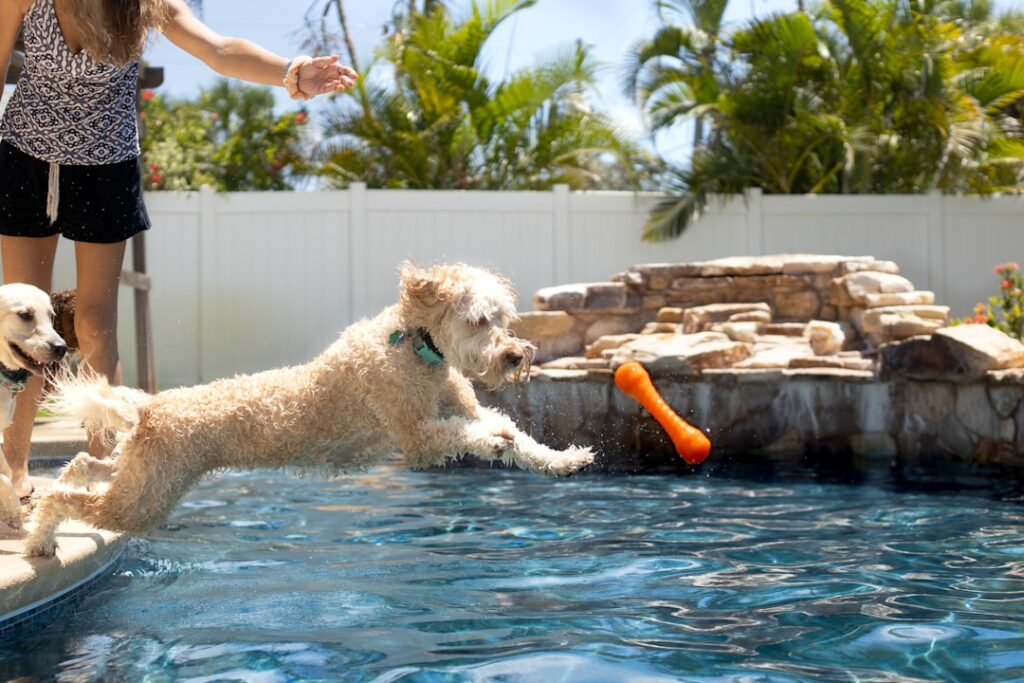
Water features, including pools and ponds, require special consideration in Lansing yards. Even strong dog swimmers can become tired or struggle with pool entrances, especially in cold weather.
Safety tips:
- Use a pool cover designed to support weight when the pool isn’t in use
- Install ramps or steps that allow pets easy access in and out of the water
- Fence off pools to prevent unsupervised access, complying with local safety regulations where required
- Keep water bowls outdoors and refresh often, as pets should not drink pool or pond water
Be alert to potential issues unique to Lansing, such as ice formation on ponds and pools in winter. Pets may try to walk on ice and fall through—seasonally restrict access during freeze-thaw cycles.
How Can You Prevent and Manage Common Outdoor Hazards?
Common outdoor risks in the city include exposure to lawn chemicals, sharp tools, and aggressive wildlife. Take a few key precautions to reduce pet injuries:
- Store fertilizers, lawn treatments, and garden tools in locked sheds
- Avoid using rodenticides or snail baits, as these can be fatal if ingested
- Inspect fencing and gates regularly for gaps or damage
- Supervise pets, especially when wildlife—like raccoons or skunks—are more active
- Choose pet-safe deicers and avoid salt-based products, which can irritate paws during winter

Cats should always have secure, enclosed “catio” or run areas to keep them safe from traffic and urban predators.
Do Lansing Pets Need Special Yard Features for Seasonal Comfort?
Lansing’s seasons can be extreme, so shade and shelter are vital for pet well-being. Heavy snow, high summer temps, and spring rains all impact outdoor time.
To help pets enjoy the yard year-round:
- Create shaded zones with fast-growing trees, pergolas, or weather-resistant shade cloth—especially important for dogs with thick coats or flat faces
- Provide insulated doghouses or weatherproof shelters for rest
- Add heated water bowls in winter to ensure constant access to fresh water
- Designate a dry, gravel or paver-covered potty spot to minimize mud and salt exposure during wet and snowy months
Remember, pets should not remain outdoors for long during periods of extreme temperature in the city.
How Can Local Households Balance Beauty and Function When Designing for Pets?
Combining attractive landscaping with practical needs is achievable by seeing the yard from both an owner’s and a pet’s perspective. Install winding paths or agility features—such as low tunnels or balance beams—for enrichment, and use dense planting beds to disguise pet “trails.”
Use hardscape materials like flagstone or brick for durability in high-traffic areas, reserving delicate beds for spots that can be fenced off or raised. Planting hardy shrubs along boundary lines can provide both privacy for humans and a visual barrier for pets.
Lansing area yards can be both family- and pet-friendly with a blend of thoughtful planning, seasonal awareness, and safe, durable materials.