

 See My Latest Article on HelloNation
Why Consider Rocks in Lansing, MI Landscaping Projects?
Rocks offer both beauty and function for landscape designs, especially in Lansing, MI where winters are cold and summers bring variable rainfall. Residents often seek ways to minimize yard maintenance while enhancing outdoor character. Rocks provide a natural, durable element that withstands local weather and doesn’t require regular mowing, trimming, or watering.
Adding rocks isn’t just about appearance—they help with drainage, reduce erosion on sloped lots, and form strong foundations for paths and planting beds. Used thoughtfully, they can transform outdoor spaces into practical, visually dynamic areas well suited to the environment and the rhythms of local life.
How Do Rocks Help With Drainage and Erosion in Local Yards?
For many Lansing households, spring thaw and summer rains can lead to soggy or eroding patches in the yard. Rocks help divert and slow excess water, giving the soil a chance to absorb moisture rather than lose it to runoff.
- Edging garden beds with river stones can create channels for water flow.
- Installing a rock “drainage swale” (a shallow trench filled with gravel or larger stones) is an easy way to prevent pooling in low spots.
- Gravel placed beneath downspouts disperses water and keeps foundation areas from washing out.
- Boulders clustered on slopes act as barriers to slow water and stabilize soil on hilly terrain.
These features are especially practical for older Lansing neighborhoods where lawns often slope or have clay-rich soils prone to holding water.
Can Rocks Replace Traditional Mulch or Lawns?
Rocks serve as an effective low-maintenance alternative to organic mulches and lawns. Gravel, small river stones, or pea stone can be used in flower beds and around shrubs.
Direct benefits include:
- No fading or need to replace each season, unlike wood mulch
- Weight holds landscape fabric in place, suppressing weeds efficiently
- Less attraction for insects such as ants compared to wood chips
Rocks are especially beneficial for narrow side yards, strips along driveways, or areas difficult to mow. Local residents sometimes use gravel around foundation plantings or in shaded sections where grass struggles to grow. Care should be taken not to pile rocks deep around tree trunks, as this can impede moisture and air exchange for roots.
How Do Rocks Fit Into Backyard and Poolside Design?
Outdoor living spaces have become more central for Lansing homeowners, particularly for those with backyard pools or patios. Rocks provide a versatile option for hardscaping:
- Flagstone or large flat stones form attractive, non-slip pool decks and garden paths.
- Boulder groupings around pools suggest a natural, “lakefront” feel and blend nicely with plantings.
- Decorative gravel is useful for paths between gardens or as a base for seating areas.
For families concerned about backyard safety, smooth river stones offer a barefoot-friendly surface, and their weight means they stay put through changing seasons.
What Are Some Creative Ways to Use Rocks as Garden Features?
Residents often look to personalize gardens with striking focal points. Rocks offer many options beyond conventional borders:
- Rock gardens, planted with drought-tolerant perennials or ornamental grasses, add dimension and interest in sun-drenched spots.
- Dry creek beds—winding stone-lined depressions—mimic natural streams and handle heavy rainfall without the maintenance of a pond.
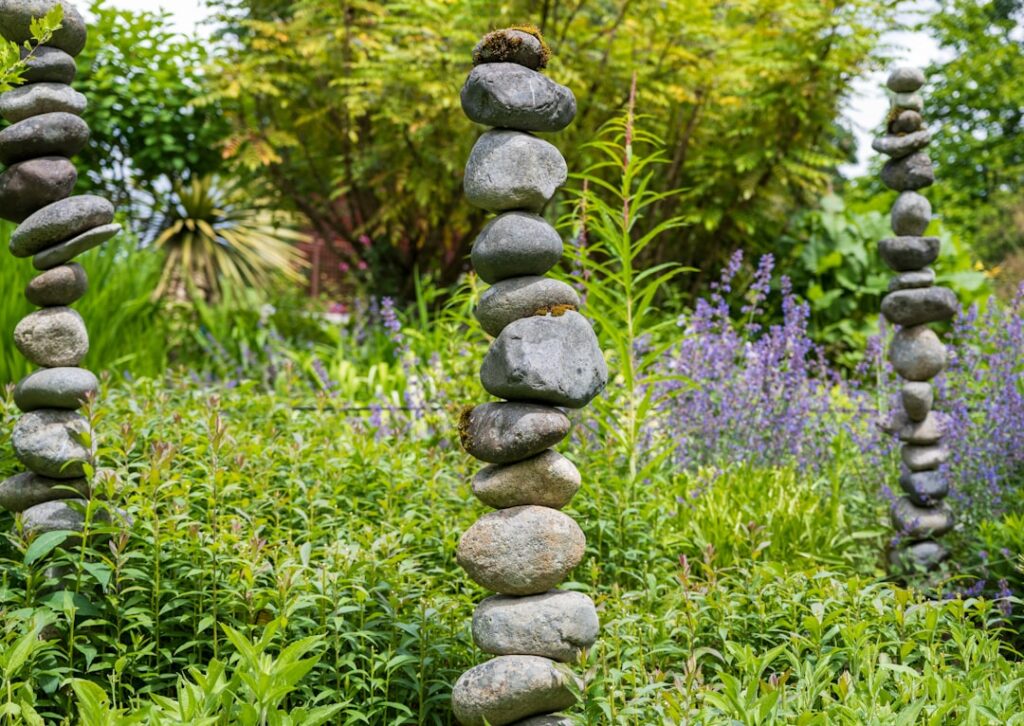
- Standing stones or locally sourced boulders serve as unique sculptural accents in open lawns or corners.

Selecting native or naturally weathered rocks ties these features to the regional landscape and helps them age gracefully.
Are There Any Common Mistakes to Avoid With Rocks in Landscaping?
Local households sometimes underestimate the weight and permanence of large stones. Moving boulders or heavy flagstone slabs is labor-intensive, and misplacing them can create long-term challenges.
Typical pitfalls include:
- Using too much gravel without enough planting, creating a harsh or “barren” effect
- Failing to address weed growth beneath stones by skipping landscape fabric
- Placing rocks too close to structures, which can trap moisture
- Choosing colors or stone types that clash with existing masonry or siding
Planning the balance of rocks with greenery helps maintain a welcoming appearance. Taking cues from the color and texture of existing stonework—for example, using similar hues to those found in home foundations or old area fieldstone walls—yields a more harmonious design.
Which Types of Rocks Work Best for Our Climate and Style?
The climate and geological history of Lansing mean rocks sourced from the region—like granite glacial boulders, fieldstone, and washed gravel—blend particularly well. They’re adapted to local freeze-thaw cycles and won’t crack or shift as easily as imported materials.
Common choices include:
- River rocks and pea gravel for paths, beds, and water drainage
- Fieldstone for informal walls or garden edging
- Large, flat flagstone for patios and walkways
- Glacial boulders for naturalistic grouping
Choosing shapes, sizes, and colors that reflect Michigan’s natural palette ensures year-round appeal without clashing with residential architecture.