

 See My Latest Article on HelloNation
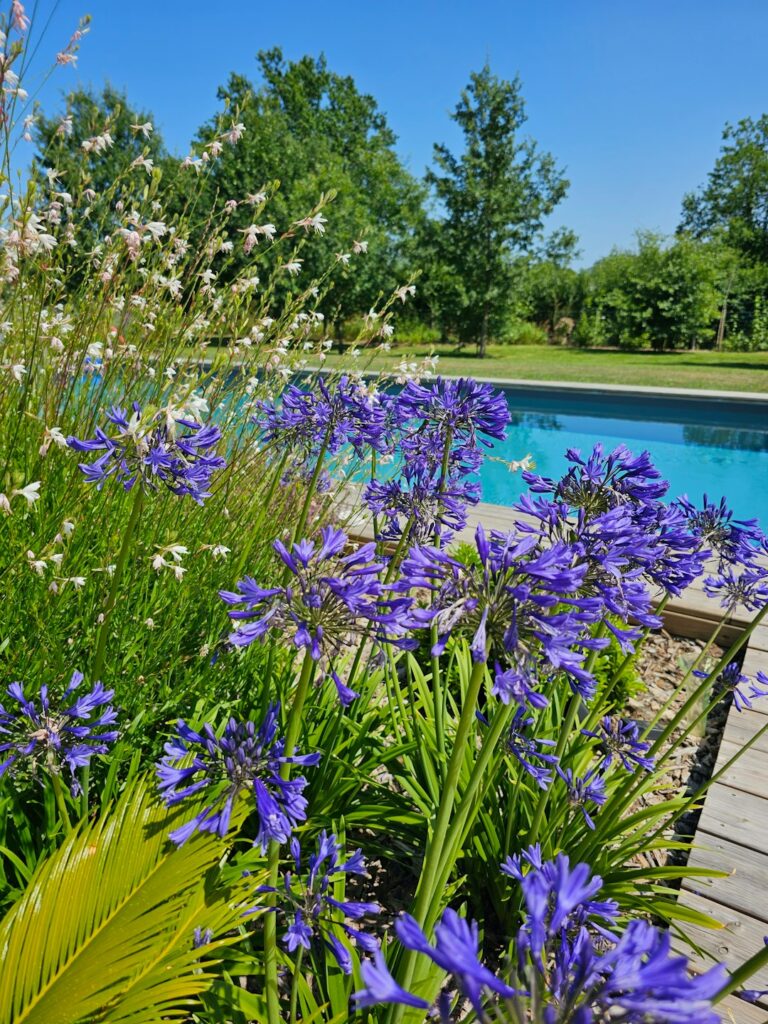
Pools create a challenging planting environment. Nearby plants must tolerate bright sun, reflected heat, occasional chlorine or saltwater splash, compacted soil, wet and dry conditions, and the freeze-thaw cycles common in Lansing, MI. The best choices are usually hardy, low-litter plants with noninvasive roots and foliage that does not create constant maintenance around the water.
What makes a plant suitable for poolside landscaping?
The most reliable poolside plants share several traits: they tolerate local winters, stay reasonably tidy, and do not spread aggressive roots toward the pool structure or plumbing. Plants with small leaves, limited fruit, and sturdy stems are often easier to maintain than trees or shrubs that drop large amounts of debris.
Look for plants that can handle:
- Full sun or bright reflected light
- Periodic splashing from treated pool water
- Well-drained soil
- Summer heat near concrete or stone
- Snow, ice, and winter temperature changes
- Occasional foot traffic around the pool area
No plant is completely unaffected by repeated exposure to chlorinated or salt-treated water. Even tolerant plants can suffer if their foliage or root zones are regularly soaked. A narrow planting bed, proper drainage, and a buffer between the pool edge and vegetation are as important as plant selection.
Which perennials grow well near pools?
Several hardy perennials can provide color without creating excessive cleanup. Choose plants based on the amount of sunlight and moisture available rather than appearance alone.
Daylilies are adaptable, sun-loving plants with sturdy foliage and flowers throughout summer. They tolerate a range of soils once established, although they perform best in soil that drains reasonably well. Plant them far enough from the pool deck that spent blooms and leaves do not fall directly into the water.
Coneflowers provide upright flowers and generally handle hot, dry conditions after they become established. Their seed heads can remain attractive into fall, but they may drop some material near the pool. Removing the seed heads after flowering keeps the planting area tidier.
Black-eyed Susans are dependable summer bloomers for sunny beds. They tolerate heat and are useful in larger planting areas where a relaxed, natural appearance is acceptable. They may need dividing over time to prevent overcrowding.
Salvia offers upright flower spikes and tends to stay relatively compact. Many varieties prefer well-drained soil and full sun, which makes them useful beside concrete or pavers that retain heat.
Catmint has gray-green foliage and purple-blue flowers. It is drought-tolerant once established and generally does not require frequent watering. Its spreading habit can be helpful for filling a bed, but it should not be placed where it will encroach on a narrow walking path.
What ornamental grasses are good around a pool?
Ornamental grasses can soften hard surfaces and provide movement without forming dense, messy hedges. Select clumping varieties rather than grasses that spread aggressively by underground runners.
Blue fescue stays compact and has blue-gray foliage that works well in smaller beds. It prefers full sun and well-drained soil, making it a practical option near patios and pool decking.
Switchgrass offers upright form and strong seasonal interest. It is generally hardy and adaptable, but larger varieties need sufficient space so their foliage does not lean over the pool or walkway.
Little bluestem is a native prairie grass with blue-green summer foliage that often develops bronze or reddish tones in fall. It handles sun and dry soil well, though it can become loose if planted in overly rich or consistently wet ground.
Avoid planting tall, fine-textured grasses directly beside the water if falling seed heads or windblown foliage would create a cleaning problem. A grass can be appropriate for the landscape while still being poorly placed next to the pool itself.
Which shrubs are practical near a swimming pool?
Shrubs can provide privacy and structure, but placement matters. Large shrubs should not be planted immediately beside the pool because roots, branches, and leaf litter can create long-term maintenance issues.
Inkberry holly is an evergreen shrub that can provide year-round structure. It generally prefers moist, acidic soil and may need protection from drying winter winds. Some plants produce berries, so selecting and placing them carefully helps reduce debris near the water.
Dwarf ninebark offers attractive foliage and spring flowers while tolerating a range of soil conditions. It is deciduous, so it will shed leaves in autumn, but it can work well several feet away from the pool edge.
Spirea varieties provide summer flowers and usually remain manageable with occasional pruning. They perform best in full sun and well-drained soil. Spirea is better suited to the outer edge of a planting bed than to the immediate splash zone.
Dwarf evergreen shrubs may provide winter color, but many common evergreens eventually become larger than expected. Check the mature width before planting. A shrub labeled “dwarf” may still become several feet wide and tall.
Are trees a good idea near a pool?
Trees can provide shade and privacy, but they require more planning than perennials or small shrubs. Avoid placing trees where mature branches will extend over the pool. Falling leaves, flowers, seed pods, and bird activity can increase water maintenance.
Trees with aggressive or extensive root systems should also be kept away from the pool shell, deck, plumbing, and drainage features. A small ornamental tree may be suitable at the edge of the yard, but planting directly beside the pool is rarely the simplest option.
If shade is needed, place the tree where its mature canopy will protect people without covering the water. Consider the direction of afternoon sun, prevailing wind, mature height, and seasonal debris before planting.

Which plants should be avoided around pools?
Some plants create unnecessary problems even when they are attractive. Avoid or carefully limit plants that have thorns, brittle branches, invasive roots, heavy fruit, sticky sap, or abundant windblown seeds.
Common concerns include:
- Thorny shrubs beside walking areas
- Fruit trees over or immediately beside the pool
- Willows and other moisture-seeking trees near pool plumbing
- Large cottonwood-like trees that shed heavy amounts of fluff or leaves
- Plants with brittle stems that break during storms
- Aggressive spreaders that can move into cracks or drainage areas
- Plants that attract many bees directly beside pool entrances or seating
This does not mean every plant in these categories is unusable. Distance and maintenance expectations matter. A plant that is unsuitable beside the pool may be perfectly reasonable at the far end of the yard.
How far should plants be from the pool?
A practical starting point is to keep larger shrubs several feet away from the pool edge and place trees well beyond the deck and equipment area. The exact distance depends on the mature size of the plant, the pool structure, local drainage, and access requirements.
Keep the area immediately beside the pool open enough for safe movement and routine cleaning. Low perennials can be used in a defined bed, while taller plants belong farther back. Avoid covering equipment access points, skimmers, drainage grates, or areas where winter coverings must be installed.
A root barrier is not a substitute for appropriate plant placement. It may redirect some roots, but it cannot eliminate the mature size or maintenance needs of a poorly located tree or shrub.
How should poolside planting beds be prepared?
Good drainage is essential. Poolside soil may be compacted during construction, and shallow beds beside concrete can become unusually hot and dry. Before planting, loosen compacted soil, add organic matter where appropriate, and confirm that water drains away from the pool structure.
Use mulch carefully. A thin layer of shredded bark or another stable mulch can reduce weeds and conserve moisture, but loose mulch can wash into the pool during heavy rain. Keep mulch away from the pool coping and avoid piling it against plant stems.
A drip irrigation system or carefully directed hand watering is usually preferable to overhead watering. It reduces wet foliage, limits splash onto the deck, and delivers water where roots need it.
What is the easiest poolside planting approach?
For lower maintenance, use a simple combination: compact sun-loving perennials near the outer edge, one or two clumping ornamental grasses for structure, and shrubs placed farther back for privacy. Repeat a limited number of plant types rather than mixing many species into a crowded bed.
In Lansing, seasonal cleanup is part of the design. Plan for spring trimming, summer watering during dry periods, and autumn leaf removal. Plants that are attractive but difficult to maintain beside the water often become frustrating within a few seasons. The best poolside landscape is one that leaves clear walking space, protects the pool from excessive debris, and remains manageable throughout the year.